
Luxury Home Inspection in Bloomington: What to Check
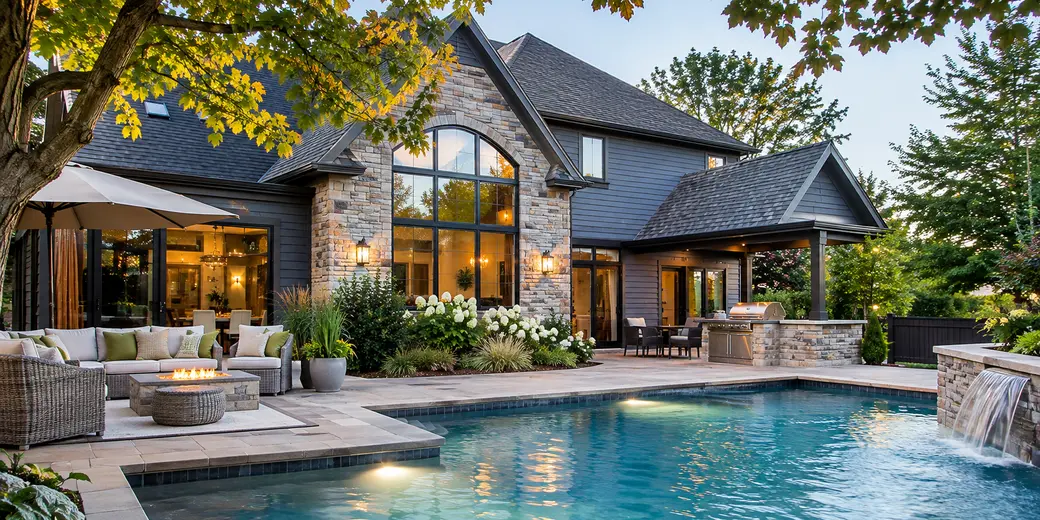
A luxury home inspection in Bloomington should go beyond a standard visual review because custom homes can conceal expensive concerns in layered mechanical systems, specialty amenities, and complex exterior features. This guide covers the systems, surfaces, local requirements, and specialist reports worth commissioning before closing on a high-value Bloomington property.
Luxury Home Inspection in Bloomington: Why It Is Different
A luxury inspection is more comprehensive because a high-value property often has more systems, more square footage, and greater consequences when a defect is missed.
- Greater square footage: Larger homes may include additional roof planes, finished lower levels, detached structures, long plumbing runs, and extensive exterior areas.
- Bespoke systems: Automation, wine storage, pools, elevators, generators, and radiant heating can require expertise beyond a general inspection.
- Specialty materials: Custom glazing, stonework, millwork, premium roofing, and exterior assemblies need careful condition review.
- Higher repair exposure: Custom equipment and hard-to-access components may require multiple qualified trades.
- Negotiation clarity: A thorough report helps distinguish routine maintenance from conditions that may justify a credit, repair, or price adjustment.
Luxury Home Inspection in Bloomington: Inspection Scope and Timing
Luxury inspection scope should be tailored to the property rather than built around a standard fee or timetable. Larger homes with multiple mechanical zones, pools, climate-controlled storage, elevators, private utilities, or advanced controls generally need more coordination than a typical single-family home.
The general inspection should establish the starting point. Its findings can then determine whether targeted specialists are needed for systems that require deeper testing, operational demonstrations, or trade-specific expertise.
Start With Bloomington's Time-of-Sale Report
Bloomington is one of the cities that requires a Time-of-Sale (TOS) Housing Inspection. Under city code, the inspection must be completed and a Time-of-Sale Housing Evaluation Report filed with the City of Bloomington before a single-family or two-family home, condominium, townhouse, or mobile home is listed for sale. Since April 1, 2022, the program has also included an energy disclosure that gives buyers data on the home's energy efficiency.
For buyers, the TOS report is a useful first document to request, but it is not a substitute for your own inspection. The city describes it as a limited visual overview, and it does not address environmental hazards such as radon, lead paint, or asbestos. Read it for flagged hazards and energy information, then use your own inspection team to go deeper. Permit history and completed-work documentation are also worth requesting for extensively renovated properties.
Luxury Home Inspection in Bloomington: The Core Inspection
A certified general inspector establishes the baseline condition of visible and accessible systems throughout the property. The review should address structure, foundation, roof, attic, exterior, electrical panels, plumbing, heating and cooling equipment, insulation, and interior components.
On a high-value Bloomington home, buyers should ask how every electrical panel, mechanical component, roof section, water-heating source, and accessible exterior feature will be documented. Multiple furnaces, air handlers, condensers, fireplaces, sump equipment, backup pumps, and service panels should appear separately in the report instead of being grouped into a generic summary.
Credentials matter because the inspector needs to recognize where a visual review ends and a specialist evaluation begins. Look for training through ASHI or InterNACHI, experience with custom homes, and reports that explain limitations clearly. A useful narrative report includes photographs, identifies material conditions, separates maintenance from potential defects, and recommends the appropriate licensed professional for further evaluation.
Specialty Systems Unique to Luxury Properties
Luxury properties often need focused follow-up because proprietary equipment and specialized installations exceed a general inspector's typical scope.
Home automation and smart-home wiring
A low-voltage technician or smart-home integrator should test control panels, network racks, distributed audio, cameras, lighting controls, and access to programming credentials. Unsupported hardware, incomplete wiring records, or intermittent controls can turn a convenience feature into a substantial modernization project.
Whole-house generators
A generator technician should review the unit, transfer switch, fuel supply, load-management equipment, and maintenance records. Failed exercise cycles, corrosion, or transfer faults can require specialized electrical and equipment work.
Wine cellars and climate-controlled storage
A refrigeration or climate-control professional should assess cooling equipment, humidity control, drainage, insulation, and vapor barriers. Moisture intrusion or unstable temperatures can affect finishes and stored collections.
Elevators and dumbwaiters
A licensed elevator professional should evaluate operation, doors, controls, safety devices, maintenance history, and available documentation. Parts availability and specialized service requirements can make even a modest malfunction more consequential than a conventional appliance repair.
Outdoor kitchens and entertainment systems
Qualified gas, electrical, and appliance professionals should inspect fixed cooking equipment, ventilation, fuel connections, refrigeration, and exterior controls. Leaks, deteriorated connections, or inaccessible lines can create a significant repair project.
Geothermal and radiant heating
An HVAC or hydronic-heating specialist should assess pumps, manifolds, controls, distribution components, and service history. Repair scope depends heavily on component access and whether a leak has affected finished surfaces.
Luxury Inspection Checklist: Core vs. Specialist
A general inspector provides the property baseline, while specialty equipment often needs qualified trade follow-up.
| System | Who Inspects It | Red-Flag Signs | Typical Repair Cost Range |
|---|---|---|---|
| Core inspection items | |||
| Foundation and structure | General inspector, structural engineer when indicated | Bowing walls, active cracking, water intrusion | Depends on engineering scope and access |
| Roof and skylights | General inspector, roofing specialist when indicated | Damaged coverings, flashing failures, interior staining | Depends on material and roof complexity |
| Electrical service | General inspector, licensed electrician when indicated | Overheating, outdated panels, improper wiring | Depends on capacity and corrective scope |
| Plumbing and water quality | General inspector, plumber, water-testing laboratory | Leaks, corrosion, low pressure, unusual results | Depends on piping access and water source |
| HVAC systems | General inspector, licensed HVAC contractor | Poor output, drainage issues, deferred maintenance | Depends on unit type and number of zones |
| Insulation and air sealing | General inspector, energy specialist when indicated | Moisture, uneven temperatures, visible gaps | Depends on affected areas and moisture work |
| Specialist inspection items | |||
| Pool and spa | Pool and spa inspector | Leaks, damaged equipment, unsafe barriers | Depends on shell, equipment, and safety scope |
| Septic or private well | Septic professional, well specialist | Backup signs, poor flow, adverse water results | Depends on system condition and site access |
| Chimney and fireplaces | Chimney professional | Damaged liner, drafting concerns, moisture | Depends on liner, masonry, and firebox condition |
| Home automation and AV | Low-voltage integrator | Unsupported equipment, incomplete controls | Depends on compatibility and programming needs |
| Elevator | Licensed elevator professional | Door, control, or operating faults | Depends on parts and service requirements |
| Pest and wood-destroying organisms | Qualified pest professional | Frass, damaged wood, active evidence | Depends on treatment and structural scope |
| Environmental, including radon | MDH-licensed radon professional | Elevated radon, moisture, deteriorated paint | Radon mitigation generally $1,500 to $3,000 |
The Minnesota Department of Health states that radon mitigation system costs generally range from $1,500 to $3,000, depending on the type of system and how the home was built.
Pool, Spa, and Outdoor Amenity Inspections
A qualified pool and spa inspector should evaluate shell integrity, visible plumbing, pumps, heaters, filters, drains, equipment-room conditions, safety barriers, automation controls, and water-treatment systems. At a luxury property, the review may also need to include water features, outdoor showers, fire features, built-in cooking areas, and sport courts.
Buyers should pay close attention to leaks, cracked surfaces, inaccessible equipment, deteriorated barriers, and heaters or pumps that cannot be demonstrated in operation. A pool professional can help distinguish ordinary maintenance from a concern involving equipment replacement, buried plumbing, surface restoration, or safety corrections. Keep in mind that Minnesota winters limit what can be tested outdoors, so a late-fall or winter purchase may require seller documentation or a holdback agreement for systems that cannot be run.
Outdoor kitchens also deserve specialist attention when they include fixed gas appliances, refrigeration, ventilation, custom electrical controls, or permanent fuel connections. Fire features and sport courts warrant targeted review when cracking, drainage, lighting, or surface condition could affect safe use. The scope and pricing of follow-up work depend on the equipment, access, materials, and extent of any hidden damage.
Environmental and Site-Specific Risks
Environmental testing is especially relevant when a luxury property has finished lower levels, older construction, private utilities, or a large and complex site. Radon testing deserves attention in finished basements and other lower-level living areas because elevated indoor radon can occur without visible warning signs.
Under the Minnesota Radon Awareness Act, sellers must disclose in writing, before a purchase agreement is signed, whether the home has been tested for radon, the most recent results, and details of any mitigation system. The Minnesota Department of Health strongly recommends that all buyers test before purchase or occupancy. For a real estate transaction, testing should be done by an MDH-licensed professional for at least 48 hours, under closed-house conditions, in the lowest occupiable level of each foundation area. MDH uses 4 pCi/L as the action level, and a quality mitigation system can often bring year-round levels below 2 pCi/L.
Mold evaluation may be warranted where there are moisture odors, staining, visible growth, prior water events, or enclosed rooms with limited airflow. Lead-paint testing is worth considering before renovation work in homes built before 1978. Estate-style properties with private wells or septic systems need dedicated water-quality and system evaluations.
Drainage, grading, retaining walls, gutters, and water-management features also deserve close attention on larger lots, particularly for homes on sloped sites near the Minnesota River Valley or close to Bloomington's lakes and parkland. Water moving toward the foundation can affect finished basements, landscape structures, and exterior amenities.
Pro-Tip: Sequence your inspections to protect your timeline. Schedule the general inspection first, then use its findings to decide which specialist visits are justified. Inspection contingency deadlines vary by purchase agreement, so book the general inspection early enough to leave time for any justified specialist follow-up.
How to Choose a Luxury Home Inspector in Bloomington
The right luxury home inspector combines relevant credentials with meaningful experience evaluating custom, high-value properties. Ask how often the inspector works with multiple HVAC zones, high-capacity electrical service, complex roofs, finished lower levels, specialty amenities, and large exterior areas.
Review a sample report before hiring. A useful report is narrative-driven, includes clear photographs, prioritizes material conditions, and explains when a licensed specialist should investigate further. A checkbox-only report may not provide enough context for a time-sensitive decision.
Confirm ASHI, InterNACHI, or applicable state-specific training, and ask about errors-and-omissions insurance limits that fit the property's value and complexity. The inspector should explain how specialist follow-up is coordinated, whether reports identify each major system separately, and how quickly the final report can be delivered under the purchase agreement.
Interview at least two inspectors. Compare their scope, communication style, custom-home experience, exclusions, and willingness to identify systems that need trade-specific evaluation. A step-by-step buyer's guide can also help you organize contract and due-diligence questions before the inspection period begins.
What Luxury Inspection Findings Mean for Negotiation
The appropriate buyer response depends on the seriousness of the finding, the repair path, and the uncertainty involved.
| Finding Type | Typical Buyer Response | Negotiation Lever (credit, repair, or price reduction) | When to Walk Away |
|---|---|---|---|
| Cosmetic or deferred maintenance | Prioritize work and budget for ownership | Usually limited unless combined scope changes the purchase decision | Rarely, unless overall condition no longer fits the buyer's plans |
| Major system defect | Obtain a licensed trade opinion and written scope | Repair, credit, or price reduction | Consider it if scope, timing, or seller response creates unacceptable risk |
| Safety hazard | Seek prompt specialist evaluation | Repair or credit, subject to contract terms | Consider walking away when the hazard is substantial or cannot be resolved confidently |
| Specialist system failure | Clarify operation, maintenance history, and restoration options | Repair, credit, or price reduction | Consider it if restoration costs or access constraints remain uncertain |
| Code violation or unpermitted work | Request documentation and professional review | Permit resolution, repair, credit, or price reduction | Consider it when legality, safety, insurability, or resale is materially affected |
Amounts and leverage depend on local market conditions, contract terms, documentation, and the home's overall condition.
How Siham Supports Luxury Buyers Through Due Diligence
The inspection period is short, and on a high-value home there is a lot to coordinate. Here is what that support looks like:
- Deep local knowledge: Active in more than 16 Twin Cities communities and working with homes from $250,000 to $2 million, Siham understands how Bloomington's established housing stock, lakeside lots, and sloped sites tend to show up in inspection reports.
- Genuine client advocacy: Rooted in a background of social services, her approach prioritizes honesty and transparency, including candid advice on when a finding is routine and when it is a reason to renegotiate or walk away.
- Coordinated specialist follow-up: Help sequencing the general inspection, radon testing, and trade-specific visits so every report lands within your contingency deadline.
- New construction representation: For newly built luxury homes, buyers get builder contract review, upgrade guidance, and independent inspections at key construction stages. Learn more about buying new construction with your own representation.
- Responsive, bilingual service: Fluent in Somali and English, Siham provides attentive, individualized service from the first showing through closing.
Frequently Asked Questions
How much does a luxury home inspection cost in Bloomington?
Luxury inspection pricing varies with square footage, age, accessibility, detached structures, and specialty systems. Request a written scope that separates the general inspection from add-ons such as radon, pool, well, septic, elevator, or smart-home evaluation.
Does Bloomington's Time-of-Sale report replace a buyer's inspection?
No. The City of Bloomington requires a Time-of-Sale Housing Evaluation Report before most homes are listed, and it includes an energy disclosure, but the city describes it as a limited visual overview. It does not address radon, lead paint, or asbestos, so buyers should still arrange their own inspection.
How long does a luxury home inspection take?
A larger custom home usually requires more on-site review than a typical single-family property because it may have several mechanical zones, electrical panels, roof sections, and exterior amenities. Allow time for the buyer walkthrough and any specialist visits supported by the initial report, plus at least 48 hours for a radon test.
What specialist inspectors should I hire beyond the general inspector?
The property's installed systems should determine the specialist list. Depending on the home, appropriate follow-up may include HVAC, roofing, electrical, plumbing, pool, chimney, radon, well, septic, elevator, and low-voltage professionals.
Can I skip the inspection on a new-construction luxury home?
No, new construction can still have incomplete work, installation defects, drainage concerns, and system-performance issues. Arrange an independent pre-closing review and consider another review before the builder warranty period ends.
What are the most common deal-killers found in luxury home inspections?
Material structural movement, active water intrusion, unsafe electrical conditions, failing roofs, major HVAC deficiencies, and malfunctioning specialty systems can change a transaction. The deciding issue is the concern's severity, repair path, and whether its full scope can be understood confidently.
Protect Your Investment in Bloomington
A luxury home inspection in Bloomington gives buyers a clearer basis for evaluating condition, risk, and next steps before closing. Siham Mahamood, a licensed Minnesota REALTOR® and CEO/Team Lead with Keller Williams Premier Realty, helps luxury buyers coordinate appropriate due diligence and interpret findings in the context of the transaction. Before waiving a contingency or approving a report, call or text (507) 213-6840, email siham@soldbysiham.com, or send a message for a straightforward conversation about what the findings mean for your purchase. If you are still narrowing your search, you can also browse homes currently for sale.
Categories
Recent Posts





GET MORE INFORMATION