
Bloomington Relocation Guide: Everything Before the Move

Bloomington, a city in Hennepin County, offers relocators established neighborhoods, major employment access, and extensive recreation, while housing and everyday costs should be weighed carefully against a household's budget. This Bloomington Relocation Guide covers the decisions that matter before a move, including housing, schools, commutes, climate, and community routines. Bloomington's population estimate was 89,034 as of July 1, 2025, according to the U.S. Census Bureau.
Bloomington Relocation Guide Quick Reference
Bloomington provides a base for households seeking regional access, established housing, and a practical mix of employment, recreation, and everyday services.
- Home-value context: The median value of owner-occupied housing units was $361,700 for 2020 to 2024, according to U.S. Census Bureau QuickFacts. This is a housing-value measure, not a current sale-price measure, so individual listings can vary substantially by condition and location, and updated move-up homes often sit well above it.
- Median household income: Bloomington's median household income was $93,211 for 2020 to 2024, based on U.S. Census Bureau QuickFacts. A relocation budget should consider housing, transportation, utilities, childcare, and seasonal maintenance together.
- Homeownership: The owner-occupied housing rate was 65.7% for 2020 to 2024, reflecting a community with a strong base of long-term owners.
- Population: The Census Bureau estimated 89,034 residents as of July 1, 2025. Bloomington combines residential districts with airport-related activities, offices, retail, hospitality, and major recreation areas.
- Winter planning: NOAA's 1991 to 2020 climate normals for the MSP International Airport weather station, on Bloomington's northeast edge, show about 51 inches of average annual snowfall. Snow removal, heating use, winter gear, and added travel time should be recurring line items in a household budget.
- Employment access: Bloomington is an economic and tourism hub with major office space, airport access, retail, hospitality, health care, manufacturing, and technology activity. The city identifies corporate headquarters including Donaldson, Toro, HealthPartners, Dairy Queen, Great Clips, Jostens, and SICK.
Bloomington Relocation Guide by the Numbers
Bloomington's measurable baseline points to a mature community where household planning should account for both metro access and the full cost of ownership.
| Measure | Figure | Source and period |
|---|---|---|
| Median owner-occupied home value | $361,700 | U.S. Census Bureau QuickFacts, 2020 to 2024 |
| Median household income | $93,211 | U.S. Census Bureau QuickFacts, 2020 to 2024 |
| Owner-occupied housing rate | 65.7% | U.S. Census Bureau QuickFacts, 2020 to 2024 |
| Population estimate | 89,034 | U.S. Census Bureau, July 1, 2025 |
| City parks | 97 parks, 9,000+ acres of parkland and open space | City of Bloomington Park System Master Plan |
| 30-year fixed mortgage rate | 7.18% | Freddie Mac Primary Mortgage Market Survey, November 5, 2026 |
Why People Are Moving to Bloomington
Bloomington attracts relocators because it pairs established suburban housing with direct access to regional jobs, the airport corridor, and large-scale recreation. The practical appeal is not one feature alone. It is the ability to combine a residential routine with major transportation routes, employment centers, parks, shopping, and entertainment.
Employment is a significant pull factor. The City of Bloomington identifies major headquarters and employers including Donaldson, Toro, HealthPartners, Dairy Queen, Great Clips, Jostens, and SICK. Mall of America and MSP International Airport also support a large visitor economy that includes retail, lodging, food service, transportation, and business travel.
The South Loop District continues to shape the city's commercial landscape. SICK's North American headquarters campus there includes a 144,000-square-foot office building as its second phase. Bloomington's location along I-494 and Highway 77, with light rail access, can make it useful for households whose work, family, or travel routines extend across the metro.
Lifestyle also matters. Bloomington's 2021 Park System Master Plan describes 97 parks and more than 9,000 acres of parkland and open space. For relocators, that means daily access to walking, biking, skiing, lakeside recreation, and green space close to home.
Cost of Living in Bloomington
Independent cost-of-living indexes generally place Bloomington above the national average, with housing as the biggest driver. Because those indexes use different methods and often disagree, a household's own numbers are a better guide than any single score.
| Cost area | What to know in Bloomington |
|---|---|
| Home price | Owner-occupied median value of $361,700 (2020 to 2024); updated move-up homes commonly sell well above this figure |
| Household income context | Median household income of $93,211 (2020 to 2024) |
| Property taxes | Review each property's tax statement and classification rather than a citywide estimate |
| Financing | The 30-year fixed rate averaged 7.18% as of November 5, 2026, according to Freddie Mac |
| Seasonal costs | Snow removal, heating, and winter vehicle preparation should be budgeted every year |
Minnesota property taxes depend on taxable market value, property classification, local levies, and eligibility for programs such as homestead treatment. A parcel-specific tax statement is more useful than a broad citywide assumption when comparing homes. To see how price, rate, and down payment interact before you start touring, a quick run through a monthly payment calculator can help set expectations.
Housing Market Overview
Bloomington is primarily an established-home market, so buyers should expect condition, maintenance history, and location to influence value as much as bedroom count or property type. The U.S. Census Bureau reported a median owner-occupied housing value of $361,700 for 2020 to 2024, but that measure does not represent a current listing or sale price.
Single-family homes remain common across many residential areas and can suit move-up households seeking yard space, additional bedrooms, or park access. Condominiums and townhomes can fit buyers who prefer reduced exterior-maintenance responsibilities or proximity to shopping, transit, offices, and airport-area employment.
The city is largely built out, which means the typical search involves mature neighborhoods, renovation differences, and selective redevelopment rather than broad master-planned expansion. Much of the housing stock dates from the city's mid-century growth years, which makes energy efficiency, mechanical updates, roof age, insulation, and maintenance history useful comparison points.
Buyer conditions can vary by property condition and price range. Updated homes with functional layouts and convenient access to employment routes may draw stronger attention than comparable homes requiring extensive work. A written comparison checklist helps relocators assess space, commute, condition, and maintenance needs consistently. Browsing current listings before a scouting trip can also help you see how condition and location shape price.
Neighborhoods and Communities in Bloomington
Bloomington neighborhoods offer different housing styles and daily routines, so the strongest fit depends on a household's space needs, commuting pattern, and preferred access to parks or commercial areas.
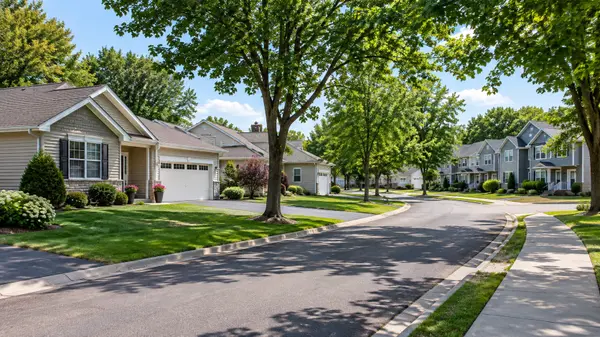
West Bloomington is known for established single-family homes, mature trees, parks, and convenient access to major roads. It can suit move-up buyers who want more interior space, yards, and a residential setting. Homes vary widely in updates, lot characteristics, and long-term maintenance needs.
East Bloomington includes older residential areas, multifamily options, and locations closer to airport-related employment and the Minnesota River corridor. It may appeal to households prioritizing transit connections or an airport-area commute.
The South Loop District has a more urban-facing feel near hotels, offices, light rail, retail, and major entertainment destinations. Attached homes and lower-maintenance residences can be practical for relocators who value access to dining, travel infrastructure, and employment activity.
The Normandale Lake area combines established residential streets with office campuses, shopping, walking routes, and recreation. Housing choices vary block by block, so visiting at different times of day can reveal traffic patterns, trail access, and the rhythm of the immediate area.
Rather than relying on broad neighborhood labels alone, compare each home's distance to work, grocery stores, parks, schools, and the routes a household will use most often. That property-level approach is especially important in a city with varied housing ages and distinct commercial corridors. For more on the city itself, explore this Bloomington community overview.
Bloomington Relocation Guide: Jobs and Economy
Bloomington's economy is diversified across tourism, hospitality, retail, transportation, health care, manufacturing, finance, professional services, and technology. Its location next to MSP International Airport and the Mall of America supports a large ecosystem of visitor services, lodging, dining, retail, and travel-related employment.
The City of Bloomington identifies headquarters and major corporate presences including Donaldson, Toro, HealthPartners, Dairy Queen, Great Clips, Jostens, and SICK. The city also reports more than 13 million square feet of office space, reinforcing Bloomington's role as both a residential community and a regional employment destination.
The Twin Cities metro area unemployment rate was 4.5% in September 2026 (preliminary), according to the U.S. Bureau of Labor Statistics. This is a metro-wide measure, not a Bloomington-only rate.
For hybrid workers, Bloomington can reduce friction around airport travel and provide road access to multiple metro employment centers. Normandale Community College also adds local higher-education and workforce-training access for residents considering career changes after a move.
Bloomington Schools and Education
Bloomington offers public, charter, private, faith-based, Montessori, and alternative education options, and families should begin their research with a specific address. Attendance boundaries, transportation, enrollment processes, specialized programs, and after-school logistics can differ across the city.
Bloomington Public Schools serves much of the community. Families can also consider options such as Seven Hills Classical Academy, Nativity of Mary School, Bloomington Lutheran School, Bethany Academy, and Ramalynn Montessori Academy, depending on grade level and enrollment availability.
Campus-level ratings and online school profiles can change over time and should not be treated as districtwide conclusions. A school's reported rating does not define every program, classroom experience, or student outcome. Before making an enrollment decision, confirm current information directly with the relevant district, charter school, or private school.
For postsecondary education and career development, Normandale Community College is in Bloomington. The wider Twin Cities region also provides universities, technical programs, and adult-learning opportunities within a reasonable commute.
Climate and Lifestyle
Bloomington has four distinct seasons, with cold winters, warm summers, and outdoor routines that change throughout the year. NOAA's 1991 to 2020 climate normals for the MSP International Airport station list January averages near 24°F for the high and 9°F for the low, while July averages are near 83°F and 65°F. Annual totals average about 31.7 inches of precipitation and 51.2 inches of snow.
Summer supports biking, hiking, golf, paddling, and park events. Fall brings cooler walking weather and changing foliage. Spring can shift quickly between rain, wind, and warming temperatures, so flexible outerwear and weather-aware travel plans are useful.
Hyland Lake Park Reserve, the Minnesota Valley National Wildlife Refuge, Nine Mile Creek, Bush Lake, and Normandale Lake offer options for hiking, biking, paddling, skiing, and quieter outdoor time. Bloomington's park system supports both destination recreation and everyday neighborhood routines.
Winter is the season that requires the most advanced planning. Relocators should budget for snow removal equipment or service, winter clothing, heating use, vehicle preparation, and extra travel time during snow or ice events. Treating seasonal maintenance as a normal household expense makes the transition easier to manage.
What to Budget Beyond the Purchase Price
- Property taxes: Minnesota taxes vary by taxable market value, classification, local levies, and homestead status. Review the current tax statement for each specific property, not only a citywide estimate.
- Utilities: Heating equipment, insulation, home size, and household use can significantly affect winter bills, especially in older homes. Ask for utility history when touring.
- Transportation: Include fuel, vehicle maintenance, parking, transit, and the household's actual commute pattern in the monthly plan.
- Snow removal: With roughly 51 inches of average annual snowfall at the nearby airport station, budget for equipment, contracted service, or association-provided removal where applicable.
- Association fees: Condos and townhomes may carry HOA dues for exterior maintenance, insurance components, amenities, landscaping, or snow removal. Review the current fee schedule and association documents for each property.
- Closing costs: Buyers in Minnesota typically pay a mortgage registry tax on financed purchases, along with lender, title, and prepaid items. Your Loan Estimate will list these before closing.
Bloomington Relocation Decision Framework
Bloomington is a practical choice for relocators seeking established neighborhoods, broad employment access, airport connectivity, and recreation. Use the framework below to test whether it fits your household's routine.
| Factor | What to evaluate in Bloomington |
|---|---|
| Home-price context | Owner-occupied median value of $361,700 (2020 to 2024); compare recent sales for your specific price range |
| Cost of living | Generally above the national average, with housing as the largest driver |
| School research | Confirm options, programs, and transportation by address |
| Commute access | Airport corridor, I-494, Highway 77, and light rail access |
| Climate considerations | Snow removal and winter travel planning |
| Lifestyle fit | Established suburb with major destinations and 97 parks |
A sound relocation decision starts with the household's daily routine rather than one citywide statistic. Compare purchase price, property taxes, insurance, utilities, transportation, association dues, commute patterns, desired maintenance level, and school logistics before narrowing the search.
How Siham Supports Relocating Buyers
Moving to a new city means making big decisions with less local context than you would like. Here is how the right guide closes that gap:
- Deep local knowledge: Siham is active in more than 16 Twin Cities communities, so she can explain how Bloomington neighborhoods differ in commute, housing age, and daily rhythm before you ever book a flight.
- Bilingual service: Fluent in Somali and English, Siham helps families relocating from near or far understand each step with clarity and cultural understanding.
- Financing that fits your values: Relocating buyers can get guidance on Islamic (halal) home financing options and referrals to providers, which is especially helpful for families new to how these programs work in Minnesota. Learn more about halal financing for Minnesota homebuyers.
- Genuine client advocacy: With a background in social services, Siham prioritizes honesty and transparency, which matters when you are relying on someone else's eyes for a home you may tour virtually.
- Responsive, personalized service: From remote showings to closing coordination, every client receives attentive, individualized support no matter where they are in the process.
Frequently Asked Questions About Moving to Bloomington
Is Bloomington a good place to live?
Bloomington can work well for households that want suburban housing, regional employment access, and frequent access to parks and recreation. The city's 2021 Park System Master Plan describes 97 parks and more than 9,000 acres of parkland and open space. The Census Bureau estimated the population at 89,034 as of July 1, 2025.
How affordable is housing in Bloomington?
Housing affordability in Bloomington depends on the individual property's price, taxes, condition, utilities, and transportation needs. The median value of owner-occupied housing units was $361,700 for 2020 to 2024, and independent cost-of-living indexes generally place the city above the national average, mainly because of housing.
What are the job prospects in Bloomington?
Bloomington connects residents to employment in hospitality, tourism, retail, transportation, health care, manufacturing, finance, professional services, and technology. Major local employers and headquarters include Donaldson, Toro, HealthPartners, Dairy Queen, Great Clips, Jostens, and SICK. The Twin Cities metro unemployment rate was 4.5% in September 2026 (preliminary).
What should I know about schools in Bloomington before moving?
Start with the address of the home under consideration because school boundaries, transportation, enrollment, and program availability can vary. Bloomington includes public, charter, private, faith-based, Montessori, and alternative options. Confirm current campus information directly with the relevant school or district before making an enrollment decision.
What are the biggest costs to budget for when relocating to Bloomington?
A complete Bloomington budget should include property taxes, utilities, transportation, snow removal, moving expenses, closing costs, and possible HOA dues. Winter maintenance also deserves a recurring budget category because average annual snowfall at the nearby airport station is about 51 inches.
Ready to Make Your Move to Bloomington?
A clear priorities list can make a Bloomington move easier to evaluate, especially when comparing neighborhoods, commutes, maintenance needs, schools, and monthly costs. Siham Mahamood, a licensed Minnesota REALTOR® and CEO/Team Lead with Keller Williams Premier Realty, works with relocating buyers to turn those priorities into a focused home search and a practical plan for moving to Bloomington. Call or text (507) 213-6840, email siham@soldbysiham.com, or schedule a call to get started.
Categories
Recent Posts


GET MORE INFORMATION