
Who Should Move to Bloomington (and Who Shouldn't)
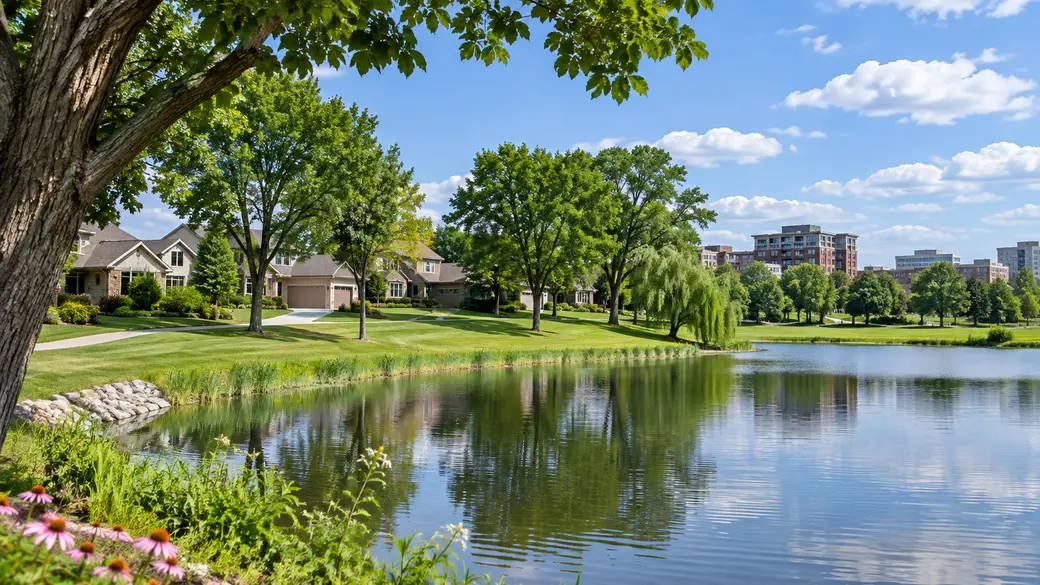
Bloomington is a strong match for people who will use its airport access, South Loop transit, major amenities, and outdoor spaces regularly. It is less compelling for movers who need the lowest possible housing costs, a fully walkable routine, or a quiet setting far from visitor activity. The honest answer depends on how your budget, work pattern, winter tolerance, and preferred pace of life align with the city.
Who Should Move to Bloomington Overview
- Population: The U.S. Census Bureau estimated Bloomington's population at 89,034 as of July 1, 2025, making it a substantial, established city in Hennepin County.
- Home value context: The median value of owner-occupied homes was $361,700 for 2020 to 2024, a property-value measure rather than a recent sale-price statistic. In August 2026, the median sale price for Bloomington homes was $385,750, and updated move-up homes commonly sell well above that.
- Household income: Median household income was $93,211 for 2020 to 2024, according to U.S. Census Bureau QuickFacts.
- Living-cost reality: Bloomington's central location, mature housing, and proximity to major destinations can create a different household budget than a more outlying suburb.
- Lifestyle signature: The South Loop District combines MSP International Airport access, Mall of America, four METRO Blue Line stations, and access to the Minnesota Valley National Wildlife Refuge.
Bloomington by the Numbers
Bloomington's measurable appeal is its established scale and housing base, not a single citywide sale-price figure.
| Measure | Figure | Source and period |
|---|---|---|
| Population | 89,034 residents | U.S. Census Bureau estimate, July 1, 2025 |
| Median household income | $93,211 | U.S. Census Bureau QuickFacts, 2020 to 2024 |
| Median owner-occupied home value | $361,700 | U.S. Census Bureau QuickFacts, 2020 to 2024 |
| Median sale price | $385,750 (up 6.3% from a year earlier) | Local MLS data, August 2026 |
| Parks and recreation | 97 parks and more than 9,000 acres of parkland and open space | City of Bloomington Park System Master Plan |
Who Bloomington Is Built For
Bloomington is built for movers who value regional convenience, established neighborhoods, and recreation they can use during an ordinary week.
Relocating homeowners with frequent airport trips are among the clearest fits. The South Loop District sits next to MSP International Airport, and the METRO Blue Line serves American Boulevard, Bloomington Central, 30th Avenue, and Mall of America stations within the city. That connection matters when flights or airport-area work are recurring parts of life, rather than occasional trips.
Outdoor-oriented households also have a practical advantage here. Hyland Lake Park Reserve offers trails, winter recreation, and access to the 2,565-acre Hyland-Bush-Anderson Lakes Park Reserve system, while the Minnesota Valley National Wildlife Refuge brings wooded bluffs, marshes, and trails close to the South Loop. These are useful for people who want a walk, ski outing, or nature break to fit around work and school schedules, not require a weekend drive.
Move-up buyers who prefer character over uniform new construction can also thrive in Bloomington. Much of the housing stock is established, so the choice often comes down to lot setting, updates, layout, and proximity to the city's busiest corridors. Buyers comparing their payment range can run a few scenarios through a mortgage payment calculator alongside a realistic plan for improvements.
Finally, people who enjoy having activities close by may appreciate the South Loop rhythm. Mall of America, hotels, restaurants, transit, and community facilities create more everyday options than a purely residential suburb.
Top Reasons to Choose Bloomington
Bloomington works best when its location and amenities solve real daily needs.
1. Airport access can simplify a busy schedule
MSP International Airport borders Bloomington's South Loop District. For frequent travelers, airport employees, and households that host out-of-town family, that proximity can turn an early departure or late arrival into a manageable part of the week.
2. Blue Line stations provide a useful alternative to driving
The METRO Blue Line has four Bloomington stations in the South Loop and connects directly to both airport terminals. It will not replace a car for every neighborhood errand, but it gives nearby residents a direct option for airport and regional trips.
3. Outdoor recreation is close to home
Hyland Lake Park Reserve, Bush Lake, Normandale Lake, and the Minnesota Valley National Wildlife Refuge give residents choices for walking, biking, paddling, skiing, and wildlife viewing. Three Rivers Park District manages Hyland Lake Park Reserve and, since January 1, 2025, also operates Bush Lake Park and Normandale Lake Park under a cooperative agreement with the city, which makes the area especially valuable for households that want four-season recreation nearby.
4. The city has more than one daily rhythm
The South Loop feels active and destination-oriented, while many residential areas feel quieter and more settled. Bloomington Ice Garden, Bloomington Center for the Arts, neighborhood parks, and local shopping give residents places to spend time close to home.
5. Jobs are close by
The City of Bloomington reports more than 13 million square feet of office space and corporate headquarters including Donaldson, Toro, HealthPartners, Dairy Queen, Great Clips, Jostens, and SICK. For many households, that means a shorter commute or the option to change jobs without changing homes.
Best Fit: Quick Checklist
- Bloomington may be right for you if airport travel or airport-area employment is part of your regular schedule.
- Bloomington may be right for you if a Blue Line connection would improve some of your trips.
- Bloomington may be right for you if you want Hyland Lake Park Reserve or refuge trails close to home.
- Bloomington may be right for you if you prefer established homes, mature landscaping, and varied layouts.
- Bloomington may be right for you if Mall of America amenities are useful rather than disruptive to your routine.
- Bloomington may be right for you if you are comfortable driving for many errands outside the South Loop.
- Bloomington may be right for you if winter recreation is a feature of your lifestyle, not an inconvenience.
Who Might Find Bloomington a Poor Fit
Bloomington can be a poor fit for movers whose priorities conflict with its transportation pattern, winter climate, or activity level.
People seeking a fully pedestrian lifestyle may feel constrained outside the South Loop. The Blue Line is a real advantage near its stations, but many grocery runs, appointments, school activities, and visits to parks across the city are easier by car. A household that expects to walk to most daily needs may find the city's layout frustrating.
Budget-sensitive buyers should also look carefully at the full picture. The median sale price was $385,750 in August 2026, but that figure does not predict the price or condition of a particular home. Renovated homes, larger lots, and locations near major amenities can command meaningfully different budgets. Buyers who want newer construction with minimal updating may find their options more limited, since the city is largely built out.
Winter-sensitive movers need to be candid as well. NOAA's 1991 to 2020 climate normals for the airport weather station show about 51 inches of average annual snowfall, and snow, icy sidewalks, cold mornings, and seasonal driving are normal parts of the routine. The city offers indoor options, including Mall of America and Bloomington Ice Garden, but they do not eliminate the practical demands of winter.
Finally, people seeking a secluded small-town atmosphere may find the airport, Mall of America, hotels, and major roads too present. Those destinations bring jobs and convenience, but they also create traffic and a faster pace in parts of the city.
When Bloomington May Not Be the Right Fit
- Bloomington may not be right for you if you need most errands to be walkable from your front door.
- Bloomington may not be right for you if winter driving and snow maintenance are deal-breakers.
- Bloomington may not be right for you if your home search is limited to recently built properties.
- Bloomington may not be right for you if airport-area traffic and visitor activity would feel disruptive.
- Bloomington may not be right for you if you want a rural setting with fewer major destinations nearby.
- Bloomington may not be right for you if your budget does not allow room for property-specific updates.
How Bloomington's Trade-offs Stack Up
| Factor | What Bloomington offers | What to weigh |
|---|---|---|
| Home-price context | Established homes with value shaped by updates and location | Renovation needs and condition vary widely by property |
| Cost of living | Central location that can reduce travel time | Housing is the largest driver of household costs |
| Access to employment | Blue Line in the South Loop, plus I-494, I-35W, Highway 77, and airport proximity | Many neighborhoods remain car-oriented |
| Lifestyle | Airport, transit, parks, and large-scale amenities | Visitor activity and traffic near major destinations |
| Best-fit buyer | Relocators, frequent travelers, move-up buyers | Buyers wanting new construction or a rural setting may look elsewhere |
Bloomington's transportation and amenity profile is documented by the City of Bloomington, Metro Transit, and Three Rivers Park District.
What Daily Life Looks Like in Bloomington
Daily life in Bloomington is practical, active, and usually car-centered, with transit becoming more useful near the South Loop.
Morning commuters commonly use I-494, I-35W, Highway 77, Highway 169, or the Blue Line. The best route depends heavily on where you live and work, but airport access and the South Loop stations can make a meaningful difference for the right schedule.
Errands often revolve around Mall of America, France Avenue, Lyndale Avenue, and 98th Street. The mall is not every resident's daily destination, yet its stores, restaurants, services, and entertainment are convenient during a busy week or a long winter weekend.
A weekday might include a lap around Normandale Lake, skating at Bloomington Ice Garden, or a program at Bloomington Center for the Arts. Weekends often move outdoors, with Hyland Lake Park Reserve, Bush Lake, and the Minnesota Valley National Wildlife Refuge offering trails, water access, and seasonal activities.
The social atmosphere varies by location. Residential pockets can feel calm and familiar, while the South Loop and airport-adjacent areas have a busier rhythm shaped by visitors, workers, and regional destinations. A closer look at Bloomington's neighborhoods and amenities can help you picture which pace suits you.
Questions to Ask Yourself Before Moving to Bloomington
Bloomington is a good decision when your routine matches the city's strengths and trade-offs.
Will the location save me time often enough to matter? Airport access, I-494, Highway 77, and Blue Line stations can be valuable, but only if your work, travel, or social schedule uses them.
Does my home budget allow for the condition I want? The median sale price was $385,750 in August 2026, yet individual homes can vary substantially based on updates, lot size, and location. With the 30-year fixed rate averaging 7.18% as of November 5, 2026, according to Freddie Mac, it pays to price in both the purchase and any near-term projects.
Do I want a car-centered routine? South Loop transit is useful, but many neighborhoods and errands remain easier by car.
Will I use the parks and community amenities? Hyland Lake Park Reserve, local lakes, Bloomington Ice Garden, and the wildlife refuge are the strongest advantages for households that expect to use them regularly.
Am I prepared for a Minnesota winter? Cold-weather driving, snow management, and indoor activity planning should be part of the move decision, not an afterthought.
How Siham Helps You Decide
Deciding whether a city fits is as important as finding the right house in it. Here is what that support looks like:
- Deep local knowledge: Active in more than 16 Twin Cities communities, Siham can give you a candid, on-the-ground comparison of Bloomington neighborhoods, price points, and daily rhythms.
- Genuine client advocacy: Rooted in a background of social services, her approach prioritizes honesty and transparency, including telling you if Bloomington is not the right match for your plans.
- Bilingual service: Fluent in Somali and English, Siham helps relocating families understand every step with clarity and cultural understanding.
- Financing guidance: Buyers can get guidance on Islamic (halal) home financing options and referrals to providers, which is especially helpful for families new to Minnesota.
- Responsive, personalized service: Whether you are touring in person or from out of state, you get attentive, individualized support from the first conversation through closing.
Is Bloomington the Right Move for You?
Siham Mahamood, a licensed Minnesota REALTOR® and CEO/Team Lead with Keller Williams Premier Realty, works with buyers and sellers weighing Bloomington against their budget, commute, preferred home style, and long-term plans. Call or text (507) 213-6840, email siham@soldbysiham.com, or book a time to talk for a straightforward conversation about whether Bloomington fits your next move.
Frequently Asked Questions About Moving to Bloomington
Is Bloomington a good place to live?
Bloomington can be an excellent place to live for households that value airport access, regional transit, outdoor recreation, and a broad range of amenities. The city maintains 97 parks and more than 9,000 acres of parkland and open space, while the South Loop adds Blue Line access and Mall of America. It is a less natural match for someone seeking a car-free or rural lifestyle.
Who typically moves to Bloomington?
Relocating homeowners, move-up buyers, airport-area employees, frequent travelers, and people who want established neighborhoods near parks often find Bloomington appealing. The South Loop District sits beside the airport and includes four Blue Line stations. Households that want both regional access and local recreation tend to get the most from the location.
What are the biggest downsides of living in Bloomington?
The central trade-offs are car dependence outside the rail corridor, winter weather, and activity near the airport, highways, and Mall of America. Housing choices can also require a careful look at condition and renovation needs because much of the city is established. These factors are manageable for many residents, but they should be part of the decision before moving.
How affordable is it to live in Bloomington?
Citywide cost figures should be treated as a planning tool rather than a guarantee of what one household will spend. Bloomington's central location can reduce travel time for airport users and regional commuters, while home condition, taxes, insurance, transportation, and renovation plans will shape the actual budget.
What type of buyer or renter is Bloomington best suited for?
Bloomington is best suited for people who want an established home base with airport proximity, Blue Line access in the South Loop, and nearby parks. It is especially practical for relocators and move-up buyers who expect to use the city's highways, recreation spaces, and services frequently. People seeking a remote rural setting, a fully walkable lifestyle, or predominantly new housing may prefer a different setting.
Categories
Recent Posts
GET MORE INFORMATION