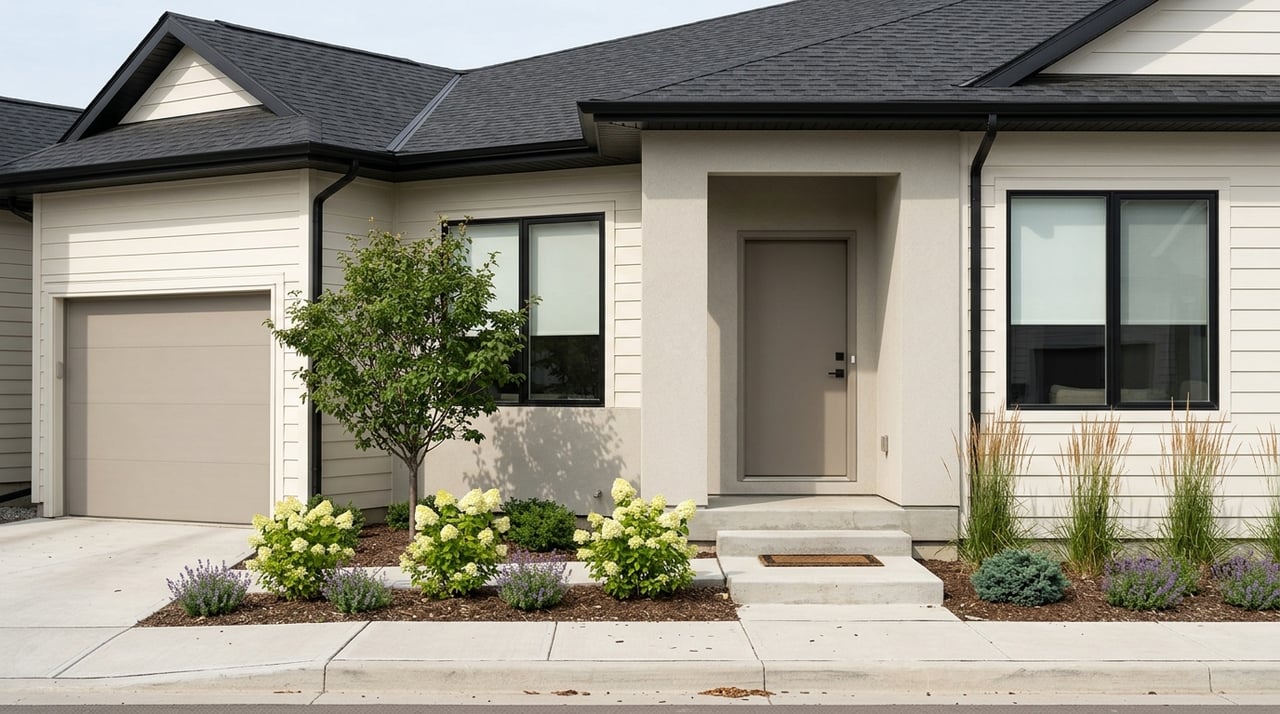
Trying to decide between a townhome and a single-family home in Apple Valley? You are not alone. For many buyers, this choice comes down to a simple question: do you want lower maintenance and a lower entry point, or more space, privacy, and flexibility? The good news is that Apple Valley offers both, and each can make sense depending on your budget, lifestyle, and long-term plans. Let’s dive in.
Apple Valley housing at a glance
Apple Valley has a well-established suburban housing market with a large supply of homes built over several decades. According to the city’s 2040 Comprehensive Plan, many neighborhoods are made up of single-family homes built in the 1960s and 1970s, while attached and higher-density housing has grown through targeted development.
That balance matters when you start your search. The same city plan notes that mid- and high-density housing is concentrated around downtown and the Apple Valley Transit Station, while the long-term land use mix still strongly favors detached housing. Regional planning data shows 49.08% of acreage allocated to single-family residential uses and 12.95% to multifamily uses in Apple Valley, which helps explain why detached homes still make up such a large share of the market.
At the citywide level, Apple Valley remains active but not rushed. Redfin’s February 2026 market snapshot shows a median sale price of $293,450 and median days on market of 71. That gives you a useful starting point as you compare different property types.
Why townhomes appeal to buyers
Townhomes can be a smart fit if you want ownership with less day-to-day upkeep. In Apple Valley, they often offer a lower purchase price than detached homes, plus association services that can make monthly planning easier.
Current townhome market snapshots show a median listing price around $267,000 citywide, with some lower-price pockets like Galaxie Commons around $225,000, based on current Apple Valley townhome listings and market pages. For buyers watching affordability closely, that lower entry point can be a major advantage.
Another big draw is maintenance. Recent Apple Valley townhome examples show HOA dues in roughly the $307 to $420 per month range, with some associations covering items like hazard insurance, lawn care, snow removal, grounds maintenance, sewer, and professional management through active local listing examples. That does not mean every HOA covers the same things, but it does show the kind of support many buyers are seeking.
Townhomes often fit convenience-first lifestyles
Apple Valley’s housing plan makes it clear that attached housing is often found near shopping, services, and central transportation corridors. The city specifically notes that attached single-family and apartment development is centered around Downtown/Central Village and the Apple Valley Transit Station in its 2040 plan.
If you value convenience, that matters. You may find that a townhome gives you easier access to everyday errands and a lower-maintenance routine, especially if you would rather not spend weekends handling yard work or snow removal.
Townhomes can work well for first-time buyers and downsizers
Apple Valley’s housing materials directly point residents to Dakota County CDA homebuyer resources, including first-time homebuyer loans, down payment assistance, homebuyer education, and rehabilitation support. For buyers trying to enter the market, those programs can make townhome ownership more realistic.
The city’s 2040 plan also specifically identifies townhomes, twin homes, and modestly priced single-family homes as practical options for first-time buyers and move-up renters. It also notes that empty-nesters and younger seniors often prefer lower-maintenance housing alternatives, including HOA communities and townhomes.
Why single-family homes still lead
If your top priorities are privacy, yard space, or room to grow, a single-family home may be the better fit. In Apple Valley, detached housing remains the dominant long-term form, and that gives buyers a broad range of options.
The city’s long-range planning and regional land-use mix both show how central detached homes are to Apple Valley’s identity. Many established neighborhoods feature older single-family homes, while newer and higher-end options add variety across the market. That range is part of what makes detached homes appealing to so many buyer types.
Recent detached-home examples in Apple Valley show a wide price spread, with recent sale points around $400,000, $433,000, and $767,000, plus a to-be-built opportunity listed at $1.9999M in a current market example. In plain terms, single-family homes can mean anything from an older starter home with a yard to a much larger or newer property.
Single-family homes usually offer more separation
For many buyers, the biggest lifestyle benefit is simple: more space between you and your neighbors. Detached homes often come with private yards, more storage, and more flexibility for how you use the home over time.
That said, it is important not to assume that single-family always means no HOA. In some Apple Valley planned communities, detached homes are still part of an association. For example, a Cobblestone Lake listing mentions association amenities including a swimming pool. So if avoiding HOA fees is high on your list, it is worth checking each property carefully.
Single-family homes may offer broader resale appeal
Apple Valley’s housing plan suggests a wide range of buyer demand for detached homes, from buyers seeking older established homes to those wanting newer, larger move-up properties. Because detached homes serve many different life stages, they often appeal to a broader pool of future buyers.
That does not mean a townhome is a weak resale choice. Apple Valley’s plan supports continued housing diversity, and attached homes should continue to see demand from first-time buyers and downsizers. Still, if resale flexibility is a major concern for you, detached homes often cast the widest net.
Townhome vs single-family in Apple Valley
Here is the practical side-by-side view:
| Feature | Townhome | Single-Family Home |
|---|---|---|
| Typical entry point | Often lower | Often higher, with a wider range |
| Maintenance | Lower exterior upkeep | More owner responsibility |
| HOA | Common | Sometimes, but not always |
| Yard space | Usually limited | Usually more space |
| Privacy | Shared walls are common | More separation from neighbors |
| Location pattern | Often near downtown and central corridors | Common in established neighborhoods across the city |
| Buyer fit | First-time buyers, downsizers, convenience-focused buyers | Buyers seeking space, privacy, or long-term flexibility |
How to choose the right fit
The best choice usually comes down to your daily life, not just the purchase price. A lower list price can look appealing, but monthly HOA dues may change the full cost picture. On the other hand, a detached home may cost more upfront while giving you more flexibility and fewer shared rules.
A helpful way to decide is to rank your top priorities before you tour homes. Ask yourself:
- Do you want a yard or are you happy with shared outdoor spaces?
- How much exterior maintenance do you want to handle?
- Is a lower purchase price more important than extra space?
- Do you want to live closer to central shopping and transit areas?
- Are HOA dues a fair trade for convenience in your eyes?
- How long do you plan to stay in the home?
If your answers lean toward ease, predictability, and lower upkeep, a townhome may be the stronger fit. If your answers lean toward privacy, outdoor space, and room to grow, a single-family home may serve you better.
Apple Valley buyers should think long term
Apple Valley is not a one-size-fits-all market, and that is actually a strength. The city’s planning documents show a clear effort to support both traditional detached neighborhoods and a more diverse housing mix over time. That gives you more ways to match your home to your season of life.
For some buyers, a townhome is the best way to start building equity without taking on too much maintenance. For others, a detached home is worth the higher entry point because it better supports daily routines, future plans, or the need for more space. The right answer is the one that fits how you want to live, not just what looks best on paper.
If you want help comparing Apple Valley townhomes and single-family homes based on your budget, timeline, and must-have features, Siham Mahamood can guide you through the process with clear advice and responsive support.
FAQs
What is usually cheaper in Apple Valley, a townhome or a single-family home?
- In general, townhomes tend to have a lower entry price in Apple Valley, with current townhome snapshots around $267,000 citywide compared with a broader and often higher range for detached homes.
Do Apple Valley townhomes usually have HOA fees?
- Yes. Current Apple Valley townhome examples show HOA dues roughly between $307 and $420 per month, though what is included can vary by community.
Are single-family homes in Apple Valley always free of HOA rules?
- No. Some detached homes in planned communities can still have HOA fees or shared amenities, so you should review each property individually.
Where are many Apple Valley townhomes located?
- The city’s planning documents show that attached and higher-density housing is commonly centered around downtown, Central Village, and the Apple Valley Transit Station area.
Is a townhome or single-family home better for first-time buyers in Apple Valley?
- Either can work, but Apple Valley’s housing materials and city plan specifically identify townhomes and modestly priced single-family homes as realistic options for first-time buyers.
Which property type may have broader resale appeal in Apple Valley?
- Detached single-family homes often appeal to the broadest range of buyers because they serve many different life stages, though townhomes also have steady demand among buyers seeking lower maintenance and central locations.